AI Agents vs AI Chatbots: What's the Difference?
Listen to this articleTap play to start listening

Introduction
Nowadays, artificial intelligence gains popularity in the world of business in many areas, including customer service, sales processes, workflow optimization, and data management. In view of the growing usage of AI, two types of technology attract special attention nowadays. These are AI agents and AI chatbots. Though these concepts might seem very similar at first, their functions are completely different.
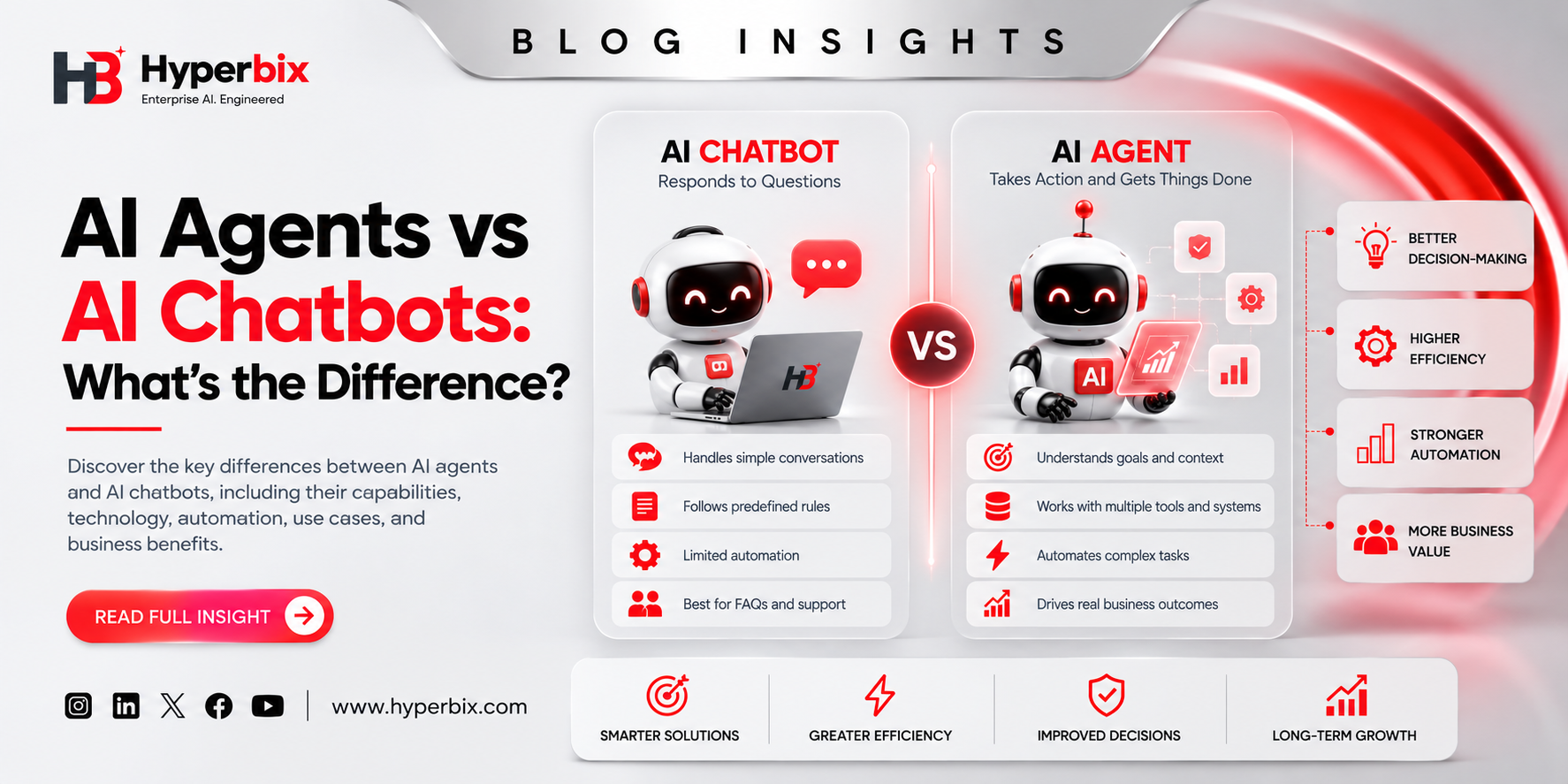
Chatbots are used to establish dialogue with people and to give answers and help through communication using natural language. AI agents, in their turn, are meant to be able to recognize the goal, make decisions and take actions independently of the user.
Choosing between these two types of technology for your company is an important step in picking the appropriate AI tool. You need to find out what you really need in your work: conversation, customer service, task automation, or workflow execution.
What Are AI Chatbots?
AI chatbots are computer programs which apply artificial intelligence to interact with humans through natural language. Chatbots have abilities to comprehend the meaning of questions, detect the intentions of the user, give information and hold conversations via websites, mobile applications, messaging services and other digital channels.
In current days, most advanced chatbots usually use the help of large language models to comprehend the context of the conversation and produce more natural language responses. Moreover, they can be integrated with the knowledge bases, FAQs, databases, CRM and APIs of a company to provide more relevant information to the user.
Chatbots are used by businesses for such purposes as customer service, leads generation, product recommendations, booking appointments, orders tracking, internal support. Rather than employing a human to answer each of the basic questions, a chatbot can automate the process of communication.
The skills of the chatbot depend on its development process. A simple chatbot can answer only pre-defined questions, but an advanced AI chatbot can comprehend the conversation and take certain actions.
What Are AI Agents?
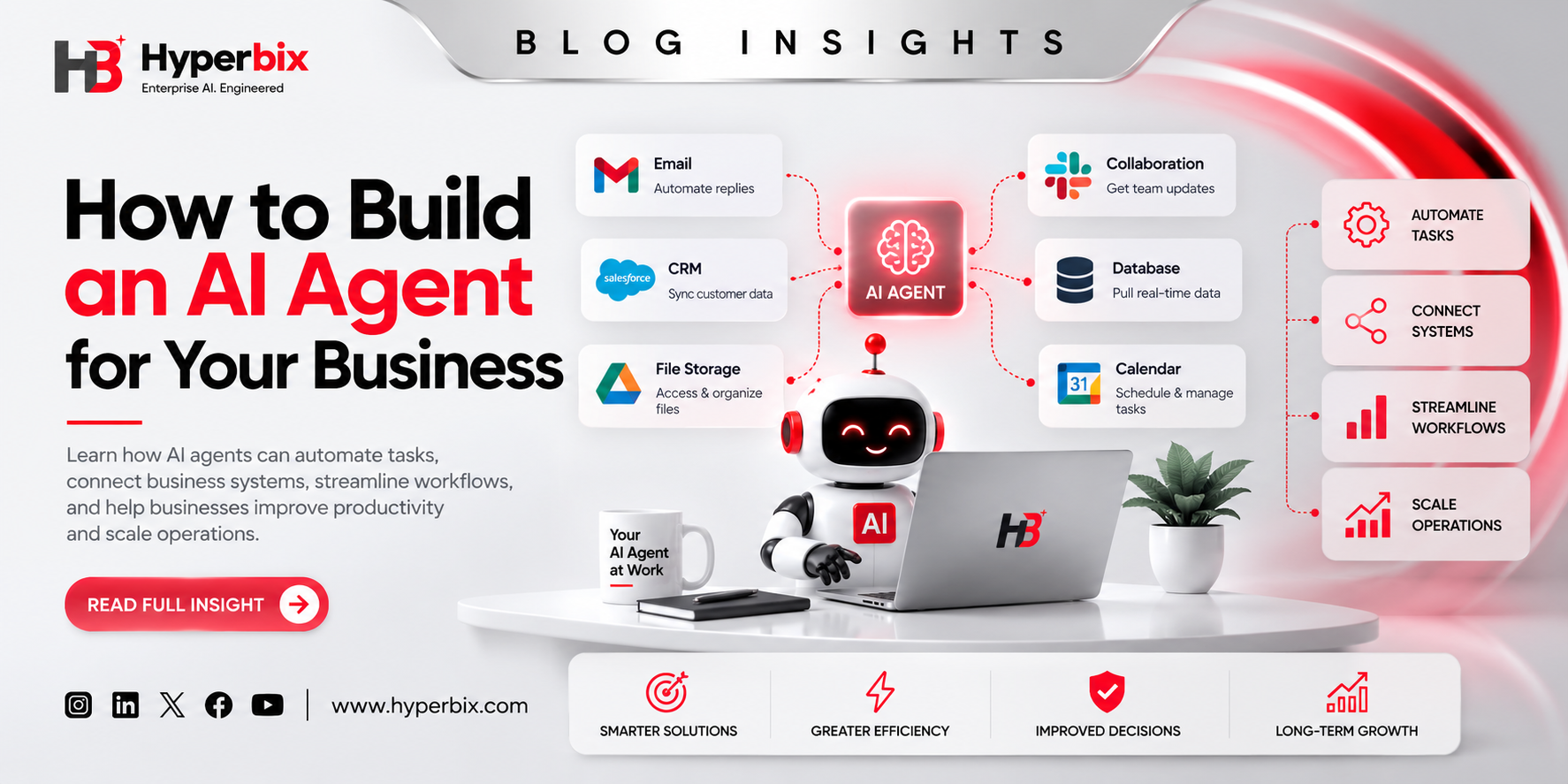
AI agents are intelligent software systems designed to achieve specific goals with a certain level of autonomy. Rather than simply responding to individual questions, they can evaluate a task, determine what needs to happen next, use available tools, and complete multiple steps.
An AI agent can combine an AI model with APIs, databases, business applications, external tools, memory, and predefined rules. This combination allows the system to interact with different parts of a business environment instead of operating only within a conversation window.
For example, an AI sales agent could receive a lead, research the company, identify relevant information, update the CRM, prepare a personalized message, and schedule a follow-up. Each action can be connected as part of a broader workflow.
AI agents can be developed for customer service, sales, finance, healthcare, software development, research, IT operations, and other industries. Their level of autonomy can also be controlled based on the type of task and the risk associated with the action.
How Do AI Chatbots and AI Agents Work?
AI Chatbot
Typically, an AI chatbot begins with receiving the user's message. In order to understand the user's intention, it processes the input and generates a proper response, taking into account the dialogue history or connected knowledge base.
Sophisticated chatbots may use retrieval technology to look up information from documents, databases, or knowledge bases available to the company. This way, they can produce more accurate responses based on the retrieved data.
There are some chatbots connected with API and other business software as well. For instance, the banking chatbot will be able to get account data, and an ecommerce chatbot will be able to look up the product availability or order status. The general flow of operations comprises interpreting the user's message and generating the response.
AI Agents
AI agents typically adopt a more dynamic process flow. They comprehend the goal, subdivide the task if necessary, find out the systems that are needed, and then perform them.
The agent will have to use many systems in performing one task. The agent could look for customer information from the CRM system, access the order database, execute the action using an API, and finally notify the customer about it.
The agent will be able to analyze the results of the action and decide how to proceed further. This capability of working across many stages is one of the most significant distinctions of the AI agent from the traditional chatbot.
AI Agents vs AI Chatbots: Key Differences
AI Agents
The key feature of the AI agent is the ability to pursue the achievement of certain goals instead of reacting to particular inputs. Depending on the design of the AI agent, it may plan actions, utilize tools, communicate with other systems, and perform several actions at once.
That is why the use of AI agents is appropriate for those business processes in which the system must accomplish something besides just providing information. An AI agent can be implemented in the business process in which decisions and actions are needed at each step.
Thus, for instance, an AI agent can control the whole onboarding process of employees in an organization.
AI Chatbots
Chatbots created using artificial intelligence technologies are communication tools above all else. The primary task for a chatbot is to interpret the message of the user and react appropriately.
They come handy especially if the company is interested in automating repetitive dialogs without creating an automated workflow. Typical examples of such tasks include customer FAQ, product queries, troubleshooting, and qualifying leads.
It may not be easy to draw the line sometimes as advanced chatbots can perform actions, while AI agents can communicate. The main difference is in the extent of autonomy and ability to perform actions.
AI Agents vs AI Chatbots: Capabilities and Functions
AI Agents
The key feature of the AI agent is the ability to pursue the achievement of certain goals instead of reacting to particular inputs. Depending on the design of the AI agent, it may plan actions, utilize tools, communicate with other systems, and perform several actions at once.
That is why the use of AI agents is appropriate for those business processes in which the system must accomplish something besides just providing information. An AI agent can be implemented in the business process in which decisions and actions are needed at each step.
Thus, for instance, an AI agent can control the whole onboarding process of employees in an organization.
AI Chatbots
Chatbots that are based on AI are usually designed with more conversational capabilities. Chatbots can be used to reply to customers' queries, explain product details, assist users, gather data, and help users perform basic tasks.
It can even help decrease the work of the support team as it can answer typical queries 24/7. Instead of hiring people who will keep replying to the same questions, a chatbot can be used.
This makes chatbots the most practical beginning option when implementing AI for many companies, since they want to solve problems of communication with the customers first of all.
AI Agents vs AI Chatbots: Use Cases
AI Agents
There are many uses for AI agents in cases where businesses are required to automate processes that entail multiple steps. These uses include automated sales, IT support, finance, research, analytics, onboarding, customer service automation, and software development.
For instance, an AI agent can assist in finding a problem, collecting system information, creating a ticket, assigning it to the right team, and notifying the employee of the status of their issue. They may also assist in various business-related processes by integrating tools and eliminating manual processes.
AI Chatbots
The usage of AI chatbots is widespread in customer communication. Chatbots may be used in such areas as website help, FAQs, leads generation, product suggestions, scheduling, order tracking, and troubleshooting.
In addition, chatbots can also be integrated into messaging services and applications in order to assist users immediately. If the company requires scalability in its communication process, then the chatbot is a good solution for such purposes.
AI Agents vs AI Chatbots: Technology and Architecture
AI Agents
The structure of an AI agent usually includes large language models, APIs, databases, memory, other third-party tools, workflow orchestration, and business applications. This makes an AI agent capable of understanding the goal, collecting information about it, choosing the right tools for accomplishing it, and performing multiple actions.
The design of an AI agent is more flexible since sometimes it is necessary to determine what the next action should be. In certain cases, it may be needed to integrate it with CRM systems, payment systems, ERP systems, databases, communication apps, and other internal business apps.
For a more advanced AI agent implementation, it may also include some additional components like Retrieval-Augmented Generation (RAG), vector databases, tool calling, authentication, monitoring, and guardrails. The last component ensures that the actions performed by an AI agent are limited by the certain boundaries.
AI Chatbots
Chatbots built using AI employ various technologies such as LLMs, APIs, databases, knowledge bases, and conversation management platforms. The architecture of chatbots, however, revolves mainly around understanding user queries and creating suitable responses.
For instance, a chatbot can look up for information from a knowledge base or interact with an external system in case a user asks for some specific information. For instance, a chatbot for an e-commerce company can interact with the order database to offer shipping status information.
The complexity level of the architecture will depend on the intended use of the chatbot. A simple FAQ chatbot would have a fairly simple design as compared to that of an enterprise chatbot.
AI Agents vs AI Chatbots: Automation and Decision-Making
AI Agents
AI-based agents aim to perform an automated task and not just deliver information. The AI agent takes up a goal and breaks down the process into smaller parts, utilizes the tools that are at hand, evaluates the outcome and works until the task is accomplished or further human intervention is needed.
For instance, an AI sales agent may take the initiative of generating a new lead, gather information on the firm, enter that information into the CRM system, craft a tailor-made message for the contact and create a follow-up task.
Even decision-making may become part of the workflow. The rules, the permissions, the requirement of approval, and the need for escalations can all be set so that businesses can decide which decisions can be made by the agents and which require humans.
AI Chatbots
Chatbots mainly perform automation in communication processes. They are capable of comprehending customers' queries, giving them answers, collecting data, providing links to helpful resources, and leading users through predetermined procedures.
Chatbots are capable of making certain decisions, for instance, by choosing the right category of support and finding out which FAQ relates to the user's query. Nonetheless, for more complicated decisions, chatbots would need some integration or even an agent-based approach. All these functions make chatbots suitable for repetitive customer communications that have predictable outcomes.
AI Agents vs AI Chatbots: Integration and Scalability
AI Agents
AI agents can interact with a number of systems within a business and carry out interactions between the different systems. For instance, the agent can work with the CRM, the email system, the database, the project management tool, and an internal application all at once for the completion of one workflow.
These agents are thus useful for companies who need to automate their processes which have currently been done using manual movement of information across the different systems. With time, additional systems can be incorporated within the ecosystem of the agent in a growing company. This scaling up needs to be done carefully since a lot of factors such as security and permissions are very crucial.
AI Chatbots
The use of AI chatbots enables businesses to have scalability in customer communication through handling multiple dialogues at once. They can assist customers on websites, mobile apps, instant messaging platforms, and any other digital means without having a different human operator for each engagement.
Moreover, a chatbot is able to integrate with CRM, knowledge base, tickets, and databases in order to generate more personalized answers. This helps companies to expand their support services with increasing number of customer interactions.
For companies that rely more on customer communication, chatbots can enable scalability without the necessity of a full-fledged autonomous agent system.
Which Is Better for Your Business: AI Agent or AI Chatbot?
AI Agents
An AI agent might be useful when you need to automate multi-step procedures, integrate software, do some tasks, and minimize manual operations in your company. This kind of tool is especially useful in cases where something must be done rather than just explained.
There are many fields where AI agents may prove to be helpful for businesses. These include sales automation, staff workflows, research, IT management, data handling, customer service automation, and so on.
AI Chatbots
An AI chatbot can be more suitable in case communication with customers is the main need. Businesses can employ chatbots to help with questions-and-answer sessions, customer interaction on websites, lead qualification, products' descriptions, and technical support. There is no need to limit oneself with a choice of either a chatbot or an AI agent.
Companies can use chatbots to conduct conversations with customers while using AI to do the heavy lifting in the background. The choice of the proper tool will depend on the particular issue the company faces, the degree of automation that is needed, integrations, data environment, security issues, etc.
How Businesses Can Implement AI Agents and Chatbots?
Businesses need to start from understanding the processes where AI may add value. Rather than choosing which technologies will be applied, it is better to find out repetitive processes, commonly asked questions of clients, manual processes, processes involving employees' switching between multiple systems.
When it comes to AI chatbots, businesses can start from implementing such a chatbot for providing customer support, answering frequently asked questions, qualifying leads, giving help regarding products and services, scheduling appointments, and any other repetitive chats. After that, it is possible to connect the chatbot with necessary information and business systems to increase the level of the chatbot's intelligence.
As far as AI agents are concerned, it is important to map the whole process and to define the systems, APIs, databases, tools the agent should interact with before allowing it to perform actions. It is crucial to establish permissions and approval points.
Phased implementation can facilitate the process. Businesses can start from a small-scale use case, monitor its performance, detect problems, and further scale up AI-based solutions for new workflows. It is helpful to cooperate with an experienced AI development company in order to implement AI agents.
How to Choose an AI Development Company for AI Agents and Chatbots development?
The selection of an AI development company is critical in the creation of custom AI solution. In addition to chatbot development, companies must ensure that their development partners have adequate skills and expertise in the aspects such as AI models, APIs, databases, automation, integrations, security and scalable architecture. Development partners must also be capable of understanding the business requirement and implementing it in an effective AI solution.
In the case of AI agent development, companies may need particular technical capabilities in workflow automation, tool integration, memory, RAG, APIs and agent orchestration. Companies may also need to ensure that the development partner understands the implementation of controls, permissions and monitoring for autonomous actions. This will help companies create AI agents that integrate effectively with their systems while still maintaining control over vital processes.
For AI chatbot development, businesses should consider conversational design, LLM integration, knowledge-base integration, multilingual support, analytics, CRM integration, and deployment across relevant channels. A development partner should be able to customize the chatbot according to the company's industry, customer journey, and communication requirements rather than relying only on generic chatbot solutions.
The service of Hyperbix can be applied to enterprises who require customized AI agents and AI chatbots based on their requirements. The way it operates can include all of the following elements such as AI model integration, automation, API connections, business systems integration, and customized AI application development. As a result, customized AI solutions tailored according to the needs of particular businesses can be created.
It is important for an appropriate partner for AI development to offer help not only at the stage of AI development itself but also afterwards. Testing, monitoring, optimization, maintenance, and improvements will allow maintaining high efficiency of an AI solution in regard to changing business needs. The choice of the right development partner in case if the need is to develop either an AI agent or AI chatbot will help to succeed in the implementation process.
Conclusion
Both AI agents and AI chatbots are effective AI solutions, but these tools address various issues. Chatbots are mainly used for communication tasks, while AI agents help with goal comprehension, decision-making under certain restrictions, tool usage, and execution of multi-step tasks.
A company that wants to implement an effective customer communication strategy, including FAQ, lead generation, and other simple activities, may choose an AI chatbot solution. Companies interested in automating complex workflows and connecting different systems will require AI agents.
Many times, both AI solutions can be combined in one system. A chatbot will handle conversations, while an AI agent will be responsible for actions in the background. The best option depends on many factors.
Blog FAQs
Frequently Asked
Questions
An AI chatbot is mainly built to understand conversations and respond to users. An AI agent can go further by interpreting an objective, selecting actions, interacting with connected tools, and working through a task with limited human involvement.
Yes. They can complement each other within the same solution. A chatbot can handle the conversation with the user, while an AI agent can process the request and perform the required actions in connected business systems.
Yes. Small businesses can use AI agents for repetitive activities such as lead management, customer enquiries, scheduling, data collection, and internal workflows. The scope of the agent can be adjusted according to the company's requirements and available resources.
An AI chatbot can be a good fit when a business primarily needs automated communication. It can assist with customer questions, website interactions, product information, lead collection, and other routine conversations.
AI agents can make certain decisions based on their instructions, available information, business rules, and permissions. For sensitive operations, businesses can introduce approval steps or human review before an action is completed.
Not always, but access to relevant business data can make an agent considerably more useful. Depending on the application, an agent may connect to databases, CRMs, documents, APIs, or other approved information sources.
Yes. A chatbot can be integrated with CRM platforms, ticketing systems, databases, calendars, and other applications. These connections allow the chatbot to provide more personalized assistance and perform specific business actions.
Development costs can vary based on the complexity of the agent, AI model, number of integrations, data requirements, security measures, user interface, automation workflows, and ongoing maintenance requirements.
The development timeline depends on the scope of the project. A simple chatbot may require less development work, while a customized AI agent involving multiple systems, complex workflows, and advanced security requirements will generally require more time.
An AI development company can help businesses select an appropriate architecture, integrate AI models with existing systems, build customized workflows, implement security measures, and provide testing and ongoing optimization for the solution.